Test Anxiety in College: 10 Apps That Actually Help — and the Research Behind Them

If your mind goes blank the moment the exam lands on your desk, you're in very good company. A 2026 meta-analysis of 67 studies and more than 43,000 students found that nearly half of them experience exam anxiety, and one in five at a high level. The good news: test anxiety is one of the most studied problems in education, and several of the techniques that work now live inside free apps on your phone.
A lot of test anxiety starts long before the exam, with the feeling that there's more material than time. That part is a planning problem, and it's the one Focusity was built to solve: it turns your deadlines and exam dates into a study plan that fits the hours you actually have. This guide is about the other half — the anxiety itself.
Below are ten apps, grouped by what they actually work on: the anxious thoughts, the body's stress response, and the one thing that lowers anxiety more reliably than any breathing exercise — knowing that you know the material. All ten run on iPhone, nine of them on Android too, and most of them cost nothing.
The 10 best apps for test anxiety at a glance
| App | Best for | Cost |
|---|---|---|
| MindShift CBT | Working on anxious thoughts | Free, no paywall |
| Wysa | Worry spirals at 2 a.m. | Free; premium about $75/yr |
| Headspace | A structured course in calming down | About $70/yr; student plan $9.99/yr |
| Calm | Sleeping the night before | About $80/yr, with a free trial |
| Insight Timer | The biggest free library | Free; optional paid tier |
| Goodnotes | Turning notes into flashcards | Free tier; from about $12/yr |
| Notability | Replaying the lecture you half-missed | Free Starter; Plus about $20/yr |
| Anki | Knowing that you know it | Free; iPhone app $24.99 once |
| Quizlet | Practicing under exam conditions | Free with limits; Plus $35.99/yr |
| Finch | Getting through the whole exam period | Free; optional Plus |
Prices as listed in the US on September 22, 2026. They change, and some vary by country.
Why test anxiety makes you go blank — and where an app comes in
Test anxiety isn't a lack of knowledge. It's two things happening at once. Your body treats the exam as a threat: heart rate up, breathing shallow, hands cold. And your mind fills with worry — what if I fail, what if everyone else knows this — which competes for the same working memory you need to actually solve the problem. That's why you can know the material cold on Tuesday and draw a blank on Wednesday morning.
So there are three levers, and each app below pulls one of them:
- The thoughts — catching the worry and answering it instead of obeying it
- The body — bringing the stress response down fast enough to think
- The confidence — walking in with evidence, not hope, that you know the material
Apps that work on anxious thoughts
1. MindShift CBT — the best free app for anxiety overall
Best for: learning to talk back to the worry
Built by the Canadian nonprofit Anxiety Canada and grounded in cognitive behavioral therapy, the approach with the strongest research record for anxiety. It's genuinely free: no subscription, no in-app purchases, nothing locked.
- Thought journal that walks you from “I'm going to fail” to a more accurate version of the same thought
- Coping cards you can pull up in the hallway before the exam
- Chill Zone with guided calm-breathing exercises
- Daily check-ins that show whether your anxiety is actually trending down
Cost: freePlatforms: iPhone, Android
mindshiftcbt.com →2. Wysa — for the worry spiral at 2 a.m.
Best for: talking a spiral down when nobody is awake
An AI chat companion, built on CBT techniques, that asks the questions a good friend would — what exactly are you afraid of, what's the evidence — and then suggests an exercise that fits. It's no therapist and doesn't pretend to be one, but at 2 a.m. before a final it beats scrolling.
- Free AI conversations, mood tracking and journaling
- Guided breathing and short mindfulness exercises
- Reframing tools for catastrophic thoughts
Cost: free core; premium about $75/yearPlatforms: iPhone, Android
wysa.com →Apps that calm your body down

3. Headspace — the most structured way to learn to calm down
Best for: building the skill before you need it
Headspace teaches meditation as a course, not a playlist, which matters here: a breathing technique only works in the exam hall if you've practiced it before exam week. Sessions run three to ten minutes, with dedicated packs for stress, panic and anxiety.
- Short, beginner-friendly guided sessions
- SOS exercises for moments of acute stress
- Sleep content for the nights before exams
Cost: about $70/year; $9.99/year for students in the US, UK, Canada, Australia and a few EU countriesPlatforms: iPhone, Android, web
headspace.com/studentplan →4. Calm — for actually sleeping the night before
Best for: the night-before insomnia
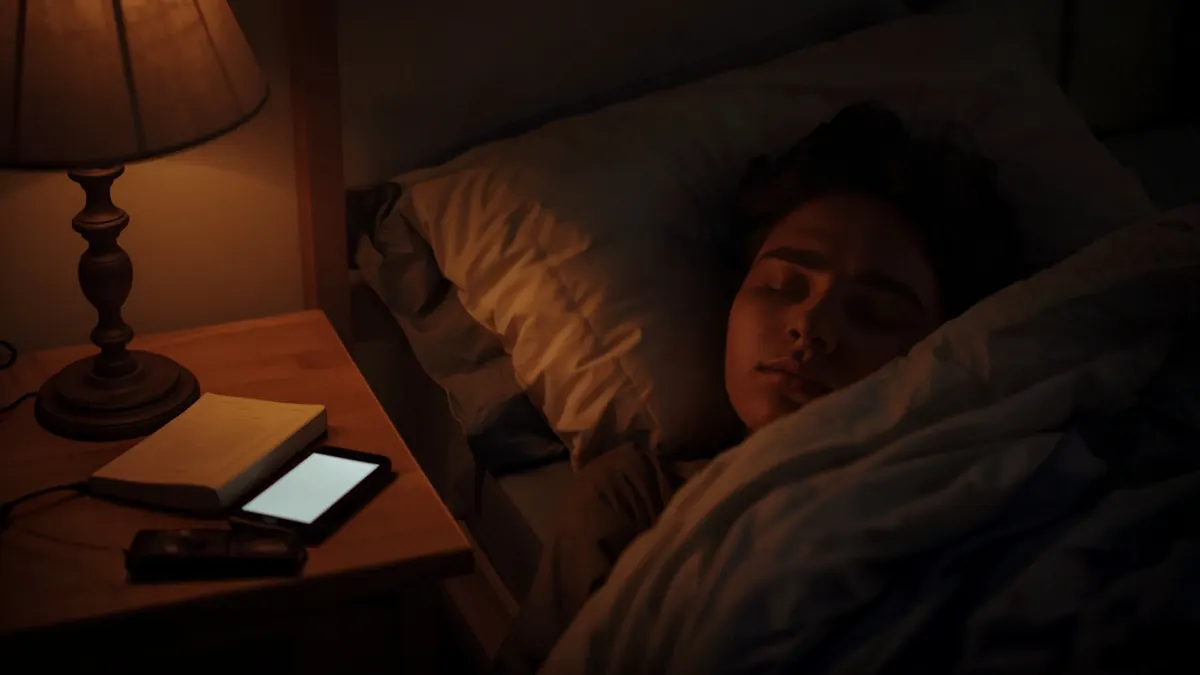
Pre-exam insomnia feeds the anxiety you wake up with. Calm's sleep stories and soundscapes are the reason most people install it, and they're genuinely good at getting a racing mind to stop rehearsing tomorrow.
- Sleep stories, soundscapes and wind-down sessions
- Short breathing exercises for the morning of the exam
- Daily guided meditations
Cost: about $80/year; free trial, and a student discount in some countriesPlatforms: iPhone, Android, web
calm.com →5. Insight Timer — the biggest free library
Best for: students who won't pay for a subscription
More than 100,000 free guided meditations, searchable by topic and length — including plenty on exam stress and sleep — plus a simple timer for silent practice. The paid tier adds courses, but you don't need it.
- Filter by length: a three-minute session fits between classes
- Content in more than 50 languages
- A plain meditation timer with interval bells
Cost: free; optional paid membershipPlatforms: iPhone, Android, web
insighttimer.com →Apps that build real confidence
The most reliable way to feel less anxious about an exam is evidence that you know the material — and the strongest evidence comes from testing yourself, not from re-reading your notes. In a study of 1,408 middle and high school students, 72% said that regular retrieval practice made them less nervous about tests and exams. College students were not in that study, but the mechanism transfers: every question you answer from memory is proof you can do it again.

6. Goodnotes — for turning lecture notes into practice
Best for: students who take notes on a tablet
Handwritten notes on an iPad or tablet that stay searchable afterwards — handwriting included. For test anxiety the useful part is what happens to those notes next: Goodnotes can turn them into flashcards, so what you wrote in class becomes what you test yourself on.
- Handwritten and typed notes, fully searchable
- Annotate lecture slides and PDFs directly
- Audio recording synced to your notes
- Built-in flashcards for self-testing
Cost: free tier; paid plans from about $12/yearPlatforms: iPad, iPhone, Mac, Android, Windows, web
goodnotes.com →7. Notability — for hearing the lecture again
Best for: students who worry they missed something in class
Notability's signature trick is recording the lecture while you write, then tapping any line of your notes to hear what was being said at that moment. That goes straight at one of the quieter sources of pre-exam dread — the gap you didn't know you had. Its study tools can also turn your notes into questions and flashcards.
- Audio recording linked to your handwriting
- Automatic transcripts once a recording ends
- Questions and flashcards generated from your own notes
- Summaries of long notes before a review session
Cost: free Starter plan; Plus (about $20/year) unlocks recording, transcripts and the study toolsPlatforms: iPad, iPhone, Mac
notability.com →8. Anki — for knowing that you know it
Best for: cumulative, memory-heavy courses
Anki schedules each flashcard just before you'd forget it, which is the most efficient kind of review there is. It's the standard among medical and law students for a reason, and it's free everywhere except the iPhone app.
- Spaced repetition that adapts to how well you know each card
- Thousands of shared decks, plus images, audio and formulas
- Syncs between desktop, phone and the web
Cost: free on desktop, Android and web; $24.99 once on iPhonePlatforms: Windows, Mac, Linux, Android, iPhone, web
apps.ankiweb.net →9. Quizlet — for practicing under exam conditions
Best for: rehearsing the exam itself
Quizlet turns your flashcards into practice tests, and a practice test is exposure therapy in miniature: the more times you've sat a timed test on the material, the less the real one feels like a threat.
- Test mode with multiple-choice, written and true/false questions
- Learn mode that adapts to what you keep getting wrong
- Millions of public study sets to start from
Cost: free with daily limits; Plus $35.99/yearPlatforms: iPhone, Android, web
quizlet.com →
Retrieval practice only works if the sessions happen in the weeks before the exam, not the night before. That's the part the app automates: it spreads your review across the days leading up to each exam, inside the free hours your timetable leaves.
Build my plan — freeAn app for getting through the whole exam period
10. Finch — for the low days in finals season
Best for: keeping the basics going when you're running on empty
Finch looks like a game: you care for a small bird that grows as you take care of yourself. Underneath it's a gentle routine tracker — drink water, step outside, write two lines about how you feel — and during a three-week exam period, those basics are the first things to go.
- Self-care goals, mood tracking and short reflections, all free
- Breathing exercises and a quiet way to check in with friends
- No ads; the paid tier is mostly cosmetic
Cost: free; optional Plus about $70/yearPlatforms: iPhone, Android
finchcare.com →Four techniques that work — with or without an app
Every app above is a delivery system for a handful of techniques. You can use the techniques on their own, and the first one needs nothing but a pen.

1. Write the worry down before you walk in
In a study published in Science, students who spent about ten minutes writing about their worries right before an exam scored higher than those who didn't — and the effect was strongest for students who were habitually anxious about tests. The explanation: worry occupies working memory, and writing it down frees that space for the exam. Ramirez & Beilock, 2011.
2. Call the racing heart what it is: readiness
Trying to calm down when you're already keyed up rarely works. Relabeling does. Students preparing for the GRE who were told that the physical arousal they felt could actually help them did better on the math section — including on the real GRE, taken months later. Before your exam, say it to yourself plainly: this is my body getting ready. Jamieson et al., 2010.
3. Breathe out longer than you breathe in
A slow breath with a long exhale — in for about four, out for about six — is the fastest way to tell your nervous system the threat has passed. It works best if you've practiced it on calm days, which is exactly what the meditation apps above are for.
4. Test yourself instead of re-reading
Re-reading feels productive and builds false confidence. Testing yourself feels harder and builds the real kind. It's the single study habit most worth borrowing from students who don't get anxious, and it's what Anki, Quizlet and the flashcard tools in Goodnotes and Notability are built around.
Putting it together: the weeks before, the night before, exam morning
| When | What to do | App |
|---|---|---|
| Weeks before | Short daily self-testing; practice slow breathing on calm days | Anki, Quizlet, Goodnotes, Headspace |
| When a worry repeats | Write it down and answer it with the evidence | MindShift CBT, Wysa |
| Night before | No all-nighter; a sleep story instead of one more chapter | Calm, Insight Timer |
| Exam morning | Ten minutes of worry-writing, two minutes of slow breathing | A pen; any breathing exercise |
| In the exam hall | Skim everything, start with a question you know, breathe out when stuck | None — you've practiced |
If it's the retake you're dreading, the diagnosis matters more than the effort — our guide to preparing for a second exam sitting separates “I didn't know it” from “I knew it and froze”, and they need different fixes.
When an app isn't enough
Apps help with everyday test anxiety. They are not treatment. If the anxiety makes you skip or drop exams, comes with panic attacks, or doesn't lift after the exam period ends, talk to someone. Most colleges run a counseling center that's free for enrolled students, and if you have a diagnosed anxiety disorder, your disability or accessibility services office may be able to arrange accommodations such as extended time or a quieter room.
If you're in crisis in the US, call or text 988, the Suicide & Crisis Lifeline, any time.
Frequently asked questions
What is the best app for test anxiety?
For most students, MindShift CBT: it is free with no paywall, built by the nonprofit Anxiety Canada, and based on cognitive behavioral therapy, the most studied approach to anxiety. If what you need is to calm your body down before an exam, a guided breathing or meditation app such as Headspace, Calm or the free Insight Timer fits better. The strongest combination pairs one calming app with a study app such as Anki or Quizlet, because feeling prepared removes one of the main causes of the anxiety.
Can an app really help with test anxiety?
For mild to moderate test anxiety, yes. The apps on this list deliver techniques with real research behind them: slow breathing, cognitive reframing, expressive writing and retrieval practice. What an app cannot do is replace a professional when anxiety is severe, lasts beyond exam periods, or makes you avoid exams altogether. In that case, start with your campus counseling center.
How do I calm down right before an exam?
Three things that take under fifteen minutes. Write about what you are worried about for about ten minutes, which in a study published in Science raised the exam scores of anxious students. Breathe slowly, with each exhale longer than the inhale. And tell yourself the racing heart is your body getting ready, not a sign that you are about to fail. Then open the exam with a question you are sure you can answer.
Are these test anxiety apps free?
MindShift CBT and Insight Timer are free, and so is Anki on desktop, Android and the web. Wysa, Quizlet, Finch, Goodnotes and Notability have useful free versions with optional paid upgrades. Headspace and Calm are subscription apps, though both offer free trials, and Headspace has a $9.99-a-year student plan in the US and a few other countries.
Can I get extra time on exams because of test anxiety?
Possibly. In the US, accommodations such as extended time or a separate room go through your college's disability or accessibility services office, and usually require documentation of a diagnosed condition, such as an anxiety disorder, from a licensed professional. Test anxiety without a diagnosis generally is not enough on its own, so if it is affecting your grades, the campus counseling center is the right first step.
Take the time pressure off the table
Apps can quiet the anxiety. A plan removes one of its biggest causes — the sense that there's more material than time.
Focusity builds your study sessions backwards from each exam date, inside the free time you actually have, so the night before is for sleep instead of cramming.
Build my plan — free