8 Study Techniques That Actually Work — and Why Rereading Your Notes Doesn't
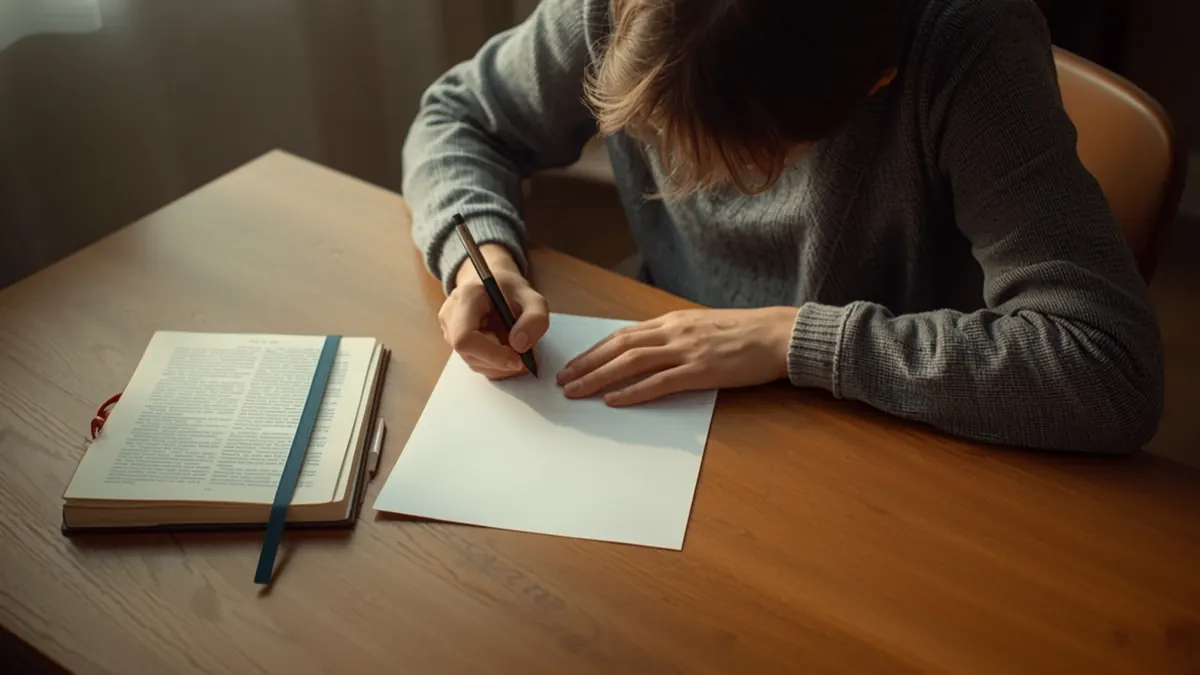
Most students study the way that feels most productive: reread the notes, highlight the textbook, go over the slides one more time. In 2013, five cognitive psychologists reviewed the evidence on ten popular study techniques — and rereading and highlighting came out near the bottom. The two that came out on top feel harder, which is exactly why so few students use them.
There are two separate questions in studying: when you do it, and what you actually do once you sit down. Focusity takes care of the first — it builds your study sessions into the free hours your class schedule actually leaves. This guide is about the second: eight techniques with real research behind them, and exactly how to use each one on your next midterm.
The short version
| Technique | What you actually do | Best for |
|---|---|---|
| Active recall | Close the book and write down what you remember | Everything — start here |
| Elaborative interrogation | Keep asking “why is this true?” | Concepts and mechanisms |
| Teach it | Explain it out loud as if to a classmate | Finding the gaps you didn't know about |
| Spaced repetition | Come back to it after a gap, not the same day | Anything you need in weeks, not tomorrow |
| Interleaving | Mix problem types instead of doing them in blocks | Math, physics, stats, econ |
| Dual coding | Pair the words with a diagram you draw | Processes, systems, timelines |
| Protect your attention | Notifications off, phone out of reach | Every session |
| Sleep | No all-nighters before the exam | Keeping what you studied |
Why the way most students study doesn't stick
Two things work against you. The first is forgetting: in the 1880s the psychologist Hermann Ebbinghaus showed that most of what we learn fades within days unless we come back to it, and his “forgetting curve” has held up in modern replications. The second is sneakier. When you reread something, it feels familiar — and familiarity is easy to mistake for knowing it. The feeling is real; the memory underneath it is shallow.
That's why the habits that feel best are often the ones that work worst:
| Feels productive | Actually works |
|---|---|
| Rereading your notes | Closing them and recalling what's in them |
| Highlighting the textbook | Turning each section into a question |
| Cramming the night before | Short reviews spread over days or weeks |
| Doing twenty problems of the same type | Mixing problem types together |
| Recopying notes neatly | Explaining the material out loud |
1. Active recall: close the book and pull it out of your head
Active recall means retrieving information from memory instead of looking at it again. It's the single most useful habit on this list, and the one the research is most confident about.
Why it works
Every time you pull something out of memory, you make it easier to pull out next time. In a classic experiment, students who read a passage and then tested themselves on it remembered less than rereaders after five minutes — but more after two days and after a week. The rereaders felt more confident; the testers remembered more. Roediger & Karpicke, 2006. The big 2013 review rated practice testing one of only two techniques with high utility. Dunlosky et al., 2013.
How to use it
- The blank page: after reading a section, close everything and write down all you remember. Then check what you missed — that list is your next study session.
- Questions in the margin: instead of highlighting, write the question each paragraph answers. Later, cover the text and answer them.
- Practice exams first, not last: if your professor posts old midterms, don't save them for the final night. Use them early, to find out what you don't know.
- Flashcards, used properly: say the answer before you flip the card. Flipping first is just rereading with extra steps.
2. Elaborative interrogation: keep asking “why?”
Elaborative interrogation is a formal name for a simple habit: for every fact, ask why is this true? or how does this connect to what I already know? — and answer it yourself before you look it up.
Why it works
A fact on its own is hard to hold on to. A fact attached to a reason is attached to everything that reason touches. The 2013 review rated this technique moderately useful — not as strong as testing, but a clear step up from rereading, and it pairs well with the first technique.
How to use it
- Turn statements into “why” questions: why does raising interest rates slow inflation?
- If you can't answer, that's the gap — go back to the source for that one point, not the whole chapter.
- Best for concepts and mechanisms (biology, econ, intro psych); less useful for pure vocabulary.
3. Teach it: if you can't explain it simply, you don't know it yet

Often called the Feynman technique, after the physicist Richard Feynman: explain the idea in plain language, as if to a classmate who missed the lecture. Wherever you start waving your hands or reaching for the textbook's exact wording, you've found the part you don't understand.
Why it works
Even expecting to teach changes how you study. In one experiment, students told they would have to teach a passage to someone else recalled more of it, and organized it better, than students told they'd be tested — though in the end everyone was just tested. Nestojko et al., 2014.
How to use it
- Explain a concept out loud in two minutes, with no notes. Record it on your phone if nobody's around.
- In a study group, take turns teaching one topic each instead of reviewing everything together.
- Bring what you couldn't explain to office hours — it's the most efficient question you can ask.
4. Spaced repetition: come back after a gap

Spaced repetition means reviewing the same material several times with gaps in between, instead of all at once. Three one-hour sessions spread across a week beat one three-hour session — even though the three-hour session feels like more work got done.
Why it works
A little forgetting between sessions is the point: pulling something back after you've partly lost it strengthens it more than reviewing it while it's fresh. The best gap depends on how far away the exam is. In a study of more than 1,350 people, the ideal gap was roughly 20 to 40 percent of the time until a test one week away, and a smaller share for tests months away. Cepeda et al., 2008.
How to use it
- Quiz next week: study today, review in a day or two, again right before.
- Final in two months: revisit each topic every week or two rather than every day.
- Combine it with active recall: every review is a test, not a reread.
- Flashcard apps like Anki do the gap math for you, card by card.
Spacing only works if the second and third sessions actually happen. That's the part the app handles: it spreads review sessions for each course across the weeks before the exam, inside the free time your schedule really has — so “review in two days” lands on a day you're free.
Build my plan — free5. Interleaving: mix problem types instead of blocking them
Textbooks give you twenty problems on the same method in a row. Interleaving means mixing them: a derivative, then an integral, then a limit, then another derivative — so each problem forces you to first figure out which method it needs.
Why it works
Blocked practice lets you run on autopilot; the exam won't. In one experiment, students who practiced a set of geometry problems in blocks did better during practice — 89% versus 60% — but a week later, the interleaved group scored 63% against 20%. Rohrer & Taylor, 2007. It's the clearest example of why “it went well today” is a bad measure of learning.
How to use it
- Once you understand each method on its own, shuffle problems from several chapters together.
- Strongest in problem-solving courses: calc, physics, stats, accounting, econ.
- Expect it to feel worse. That's the sign it's working.
6. Dual coding: pair the words with a picture
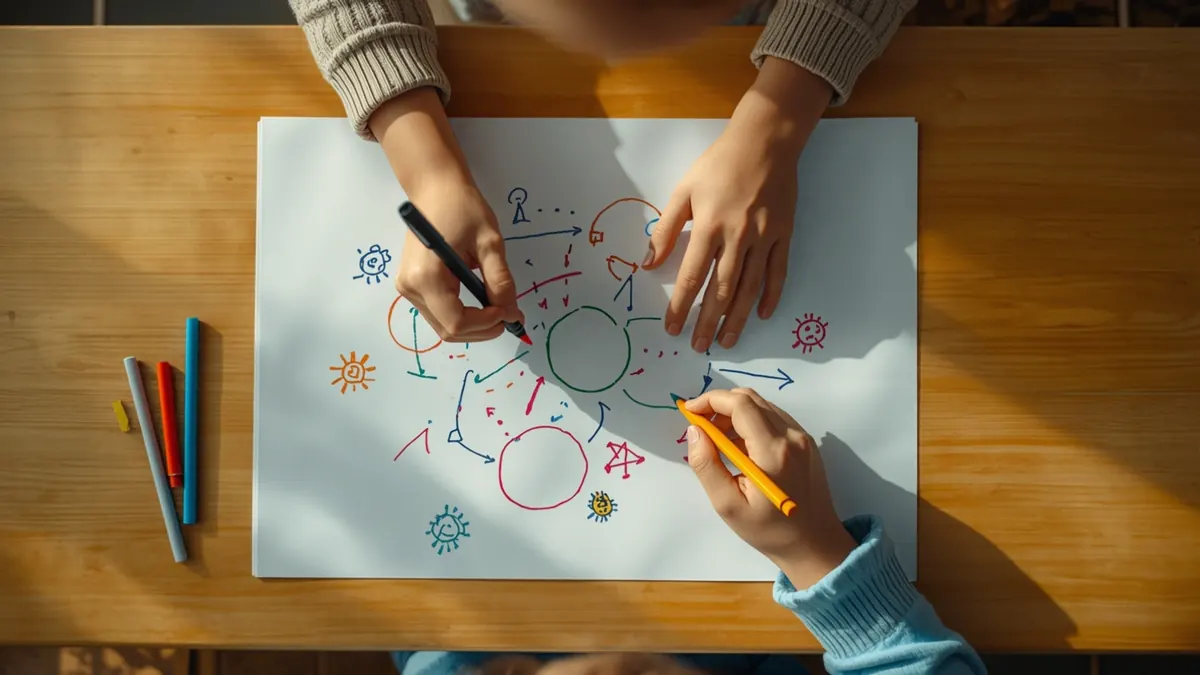
Dual coding means representing the same idea in two forms — words and a visual — so there are two routes back to it. It works best when you draw the visual: a flowchart of a process, a timeline, a diagram of how the parts of a system connect.
How to use it
- After reading about a process, sketch it from memory as boxes and arrows, then compare with the source.
- Chunk as you go: group a long list into three or four meaningful clusters; you remember a few chunks far more easily than a dozen loose items.
- Skip the decoration. A rough diagram you drew beats a beautiful one you copied.
7. Protect your attention: notifications off, phone out of reach

None of the techniques above work on half your attention, and the phone is the main thief.
Why it works
In one study, simply receiving a notification — without answering it — hurt performance on a task that needed focus about as much as actually using the phone did. Stothart et al., 2015. You may have heard a stronger claim, that a phone merely sitting on the desk drains your brainpower. That study went viral, but it failed to replicate in 2022, so we'd rest the advice on notifications, where the evidence is solid.
How to use it
- Turn on Do Not Disturb or a focus mode for the whole session, not just silent.
- Put the phone in another room or a bag — out of reach means checking it takes effort.
- If you need an app to study, use it in airplane mode.
8. Sleep: the study technique nobody counts
Sleep is when the brain consolidates what you learned during the day — and missing it damages what you learn next. In a 2007 study, people who skipped a single night of sleep were about 40% worse at forming new memories the following day. Yoo et al., 2007.
- An all-nighter before a final trades material you already know for a few hours of material you won't keep.
- Studying in the evening and sleeping on it is a legitimate strategy, not an excuse.
- If you have to choose between one more hour of review and an hour of sleep, the night before the exam, choose sleep.
Tools that make these techniques easier
None of this needs an app — a pen and a blank page cover most of it. But a few tools take the bookkeeping off your hands:
| Tool | Technique it supports | Cost |
|---|---|---|
| Anki | Spaced repetition + active recall | Free; iPhone app $24.99 once |
| Quizlet | Active recall and practice tests | Free with limits |
| RemNote | Notes that turn into spaced flashcards | Free tier |
| Brainscape | Flashcards repeated by how confident you are | Free tier |
For the full research story in plain English, Make It Stick: The Science of Successful Learning (Brown, Roediger & McDaniel, 2014) is the book most study-skills advice is quietly built on. And if the problem isn't memory but nerves on exam day, see our guide to apps for test anxiety.
Putting it together: one study session, start to finish
- Phone away, notifications off.
- Warm up with recall: spend five minutes writing down what you remember from the last session on this course — that's spacing and active recall at once.
- New material in small pieces: read a section, close it, recall it, and ask “why?” about anything you got wrong.
- Practice mixed: if there are problems, shuffle this week's type in with older ones.
- Explain one thing out loud, or sketch it as a diagram.
- End with a list of what you couldn't recall. That list is where the next session starts.
Frequently asked questions
What is the most effective study technique?
Active recall — testing yourself instead of rereading — combined with spacing your reviews out over time. A major 2013 review of ten common techniques rated practice testing and distributed practice as the only two with high utility, and rated rereading and highlighting, the two most popular, as low.
How can I memorize things faster?
Stop measuring speed by how quickly the material starts to feel familiar. Read a section once, close it, and write down everything you remember; check, then do it again a day or two later. It feels slower and harder than rereading, but it is the version that is still there on exam day. Sleeping properly on the nights you study makes the rest of it stick.
Is rereading your notes a waste of time?
Not a complete waste, but close to the least efficient thing you can do with the time. Rereading makes material feel familiar, and familiarity is easily mistaken for knowing it. Read once to understand, then spend the rest of the time recalling it from memory and checking what you missed.
How long should I wait between study sessions on the same material?
It depends on how far away the exam is. In a large 2008 study, the best gap between two study sessions was roughly 20 to 40 percent of the time until the test for a test a week away, and a smaller share for tests months away. In practice: for a quiz next week, review after a day or two; for a final that is months away, a week or more between reviews works better than daily repetition.
Does sleep really affect memory?
Yes, in both directions. Sleep after studying helps consolidate what you learned, and missing it damages what you learn next: in a 2007 study, people who skipped one night of sleep were about 40 percent worse at forming new memories the following day. An all-nighter before an exam trades the material you already know for a few more hours of material you will not keep.
You know how to study. Now find the when.
Every technique here works better spread over time than squeezed into the last week — which means the sessions have to exist before the exam does.
Focusity turns your deadlines and exam dates into study sessions placed in the free time you actually have, spaced out the way this article recommends.
Build my plan — free